
AI-era slang dictionary

AI Engineering & Codebase Quality Slang

Slop
coding

Slop coding is committing AI-generated code without reading, integrating, testing, or keeping design boundaries. What it means and how to prevent it.

git diff --stat: +12,480 / -18 (38 new helper files)
First recorded: 2024Habitat: unreviewed pull requests, agent loops, parallel utility directoriesStatus: rapid accretionUpdated:
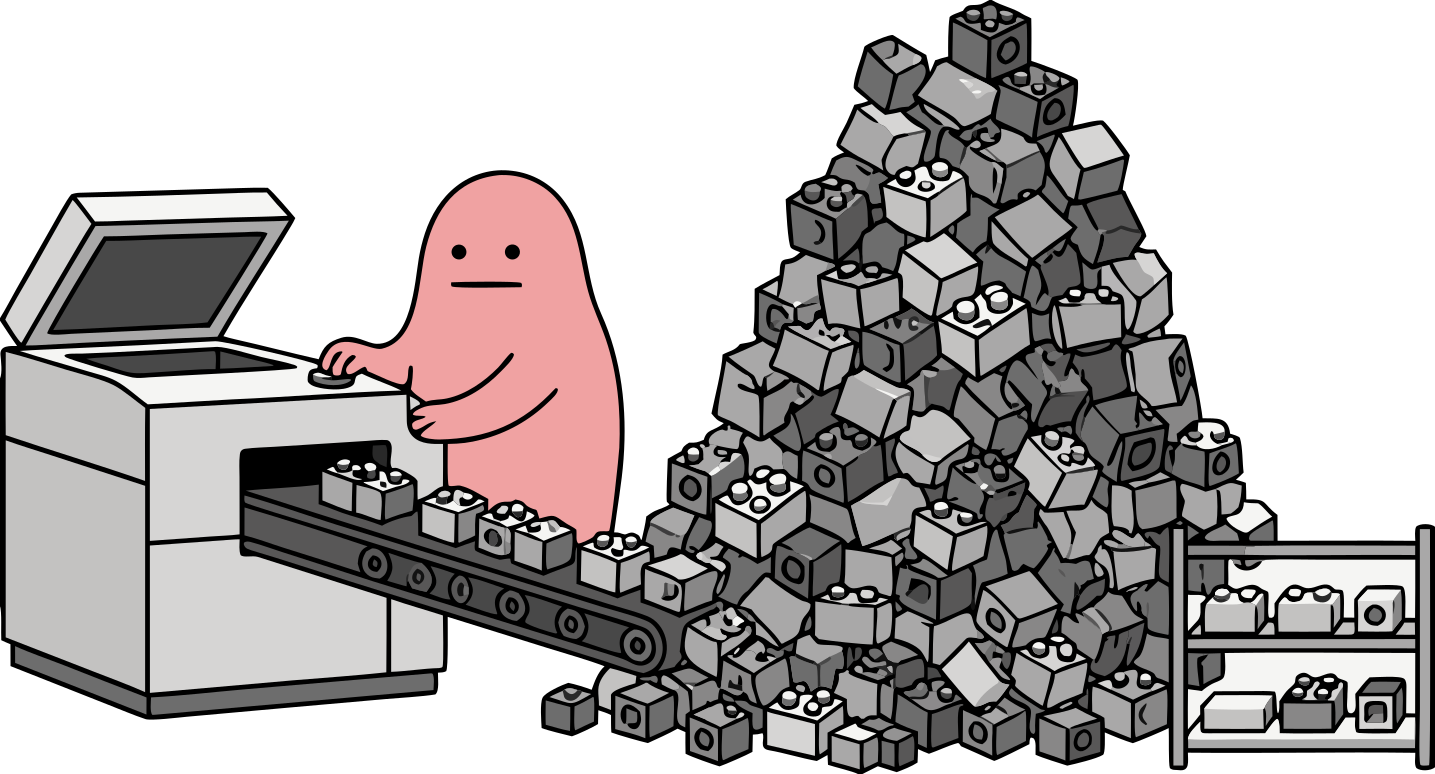
The deadpan pink blob mascot operating an absurd oversized photocopier churning out a teetering pile of duplicate component blocks next to a tiny organized shelf

The short version

Accepting generated code without reading or owning it.

Unchecked synthetic code accretion: duplicating helpers, bypassing architecture boundaries, and committing code no human has verified.

What slop coding actually is

Slop coding is the practice of rapidly accepting and committing AI-generated code into a durable repository without reading it, understanding its design boundaries, or testing its real failure modes. It is defined by the absence of human comprehension and architectural intent, not by the tool used to generate the tokens.

The core symptom is synthetic code accretion. Because language models predict likely code locally rather than auditing the entire project structure, they routinely reinvent existing utilities under slightly altered names, introduce cargo-cult abstractions, and rely on broad type escapes (`any` or unvalidated casts) to silence tooling. Over time, the codebase fills with duplicate helpers, unused edge branches, and unmaintained weight that no individual engineer understands.

Cultural Context & Sighting

The prompt in the wild.

“A pull request introduces 2,800 lines of code across fourteen new files to render a single confirmation modal. It includes three redundant date-formatting helpers, an error wrapper that logs and swallows exceptions, and unit tests that mock the entire module without verifying actual behavior.”

Why it differs from vibe coding and prototypes

Slop coding is often confused with vibe coding or rapid prototyping, but the context is fundamentally different. Disposable scripts, hackathon prototypes, and throwaway experiments exist to explore an idea quickly; their lifespan is short, and discarding them carries no operational risk.
Slop coding happens when that disposable mindset is applied to durable, shared repositories. In production software, the primary cost is reading, maintaining, and debugging code over years. Grounded longitudinal research from GitClear analyzing 153 million changed lines observed measurable downward pressure on code maintainability—specifically marked by increased code churn and duplicated logic relative to refactoring. Meanwhile, industry benchmarks like the 2024 DORA report note widespread AI tool adoption but emphasize that survey-reported speed does not automatically translate to sustainable system stability.

Useful Practical Framing

How to prevent synthetic code accretion

Keeping durable repositories maintainable while using AI coding tools.

01 / Read every diff line

Treat generated code as unvetted third-party contributions. If no one on the team can explain a function's behavior or failure paths, do not merge it.

02 / Protect design boundaries

Enforce the reuse of existing project helpers and models instead of allowing agents to spawn parallel utility directories and cargo-cult wrappers.

03 / Verify real behavior

Reject tests that merely assert their own mocked objects. Write integration checks that test real state transitions, edge cases, and failure modes.

Tiny origin story

How Slop coding entered the chat.

Evolution from early observations to current AI-era usage.

  1. 2022–2023

    AI coding assistants and code-completion tools become common across mainstream developer editors.

  2. Jan 2024

    GitClear publishes longitudinal analysis of 153M changed lines, documenting rising code churn and copy-pasting.

  3. Late 2024

    The DORA 2024 report studies AI adoption patterns, distinguishing survey-based speed perception from delivery outcomes.

  4. Now

    “Slop coding” emerges as standard developer slang for unreviewed synthetic code accretion in production codebases.

Keep reading

Same ecosystem, different specimen.

All field notes

What to say back

Treat generated code like an unvetted third-party pull request: read every diff line, enforce the reuse of existing project helpers, check edge-case failure behavior, and ensure the author can explain the change.

Refer the speaker