
AI-era slang dictionary

Vibe-coding prompt meme / magical prompting

Make no
mistake!

The stern little suffix people add after asking an AI to build an entire company from one sentence.

Not a spec. An imaginary --no-bugs flag.

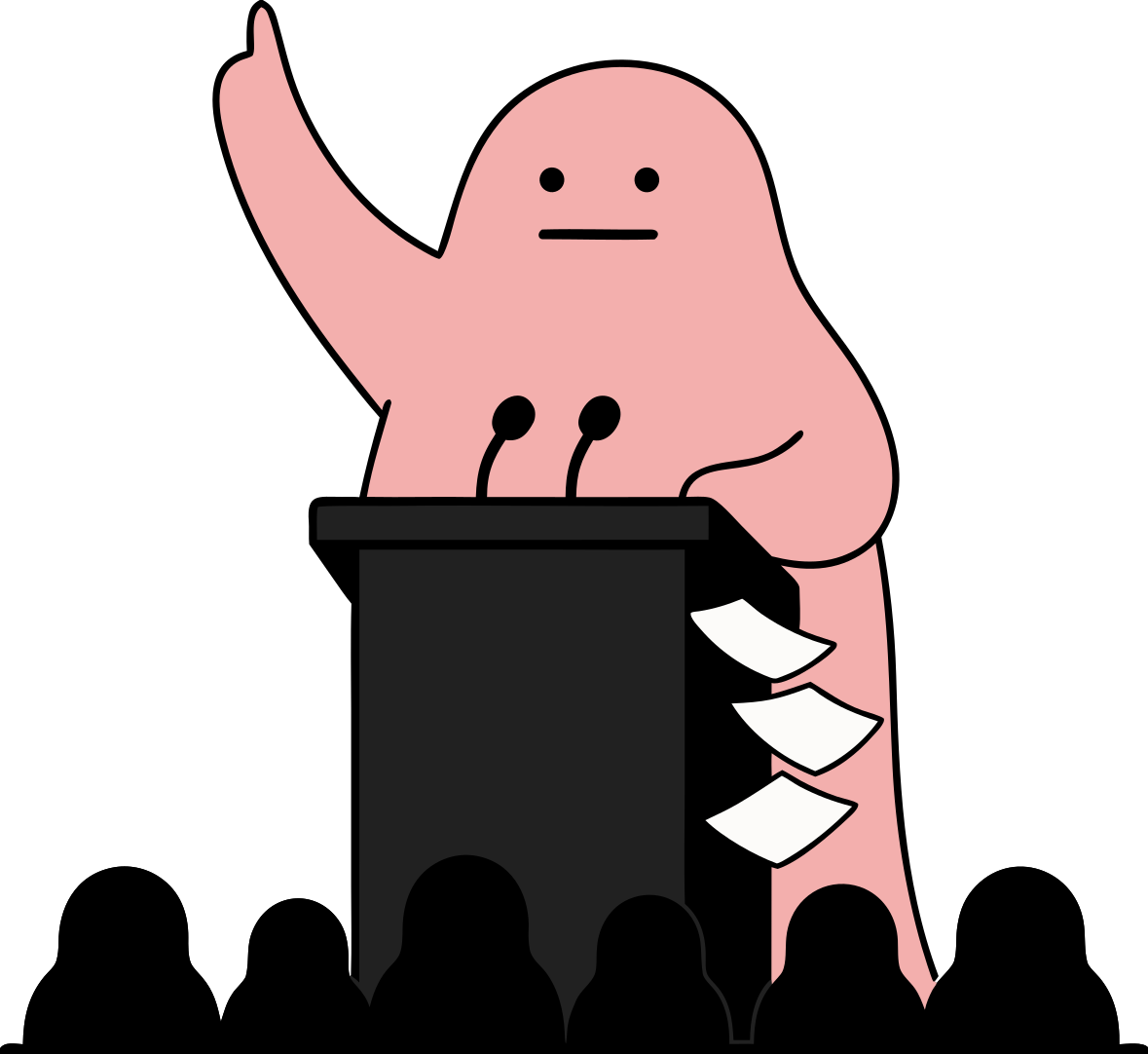
The blob mascot delivering an overly serious speech from a podium while blank pages spill out

The short version

It means: please be perfect.

It gives the model no definition of correct, no constraints, and no way to prove success.

What it actually is

In vibe-coding culture, “make no mistakes” is the magical suffix attached to a gigantic, underspecified request. It is treated like a hidden flag that switches an AI from probabilistic code generator to flawless staff engineer.

It adds no useful constraint. The model still does not know what a mistake means for this product, which cases matter, what the architecture is, or how anyone will verify the result.

Why it is funny

A giant request meets a magic spell.

“Build me a $1M SaaS for real estate. Add auth, payments, and make no mistakes.” The request contains no spec, no data model, no acceptance criteria, and one extremely stern instruction for the universe. The phrase became a meme because a stern sentence cannot replace a product spec, a review, or a test suite.

The comedy is the ratio: a million-dollar product request in one sentence, followed by an incantation intended to erase every missing requirement, test, edge case, and deployment decision.

It is prompt desperation, not a quality system. Good context, explicit constraints, independent review, and executable checks do real work; demanding perfection does not.

Tiny origin story

A magic suffix meets a real codebase.

  1. 2023–24

    Persona prompts promise that an AI can be a flawless senior engineer if asked firmly enough.

  2. 2025

    Vibe coding turns huge software requests into one-line agent prompts.

  3. 2026

    “Make no mistakes” becomes shorthand for magical prompting and missing specifications.

  4. Now

    The phrase survives as the imaginary --no-bugs flag.

Keep reading

What to say back

Replace it with what the agent can actually use: the desired outcome, constraints, examples, acceptance criteria, and a way to check the result.

Refer the speaker
by Alvin